Is this an Asian hornet?
Take a photo and compare with these traits. Not sure? Send the photo via WhatsApp — we'll take a free look.
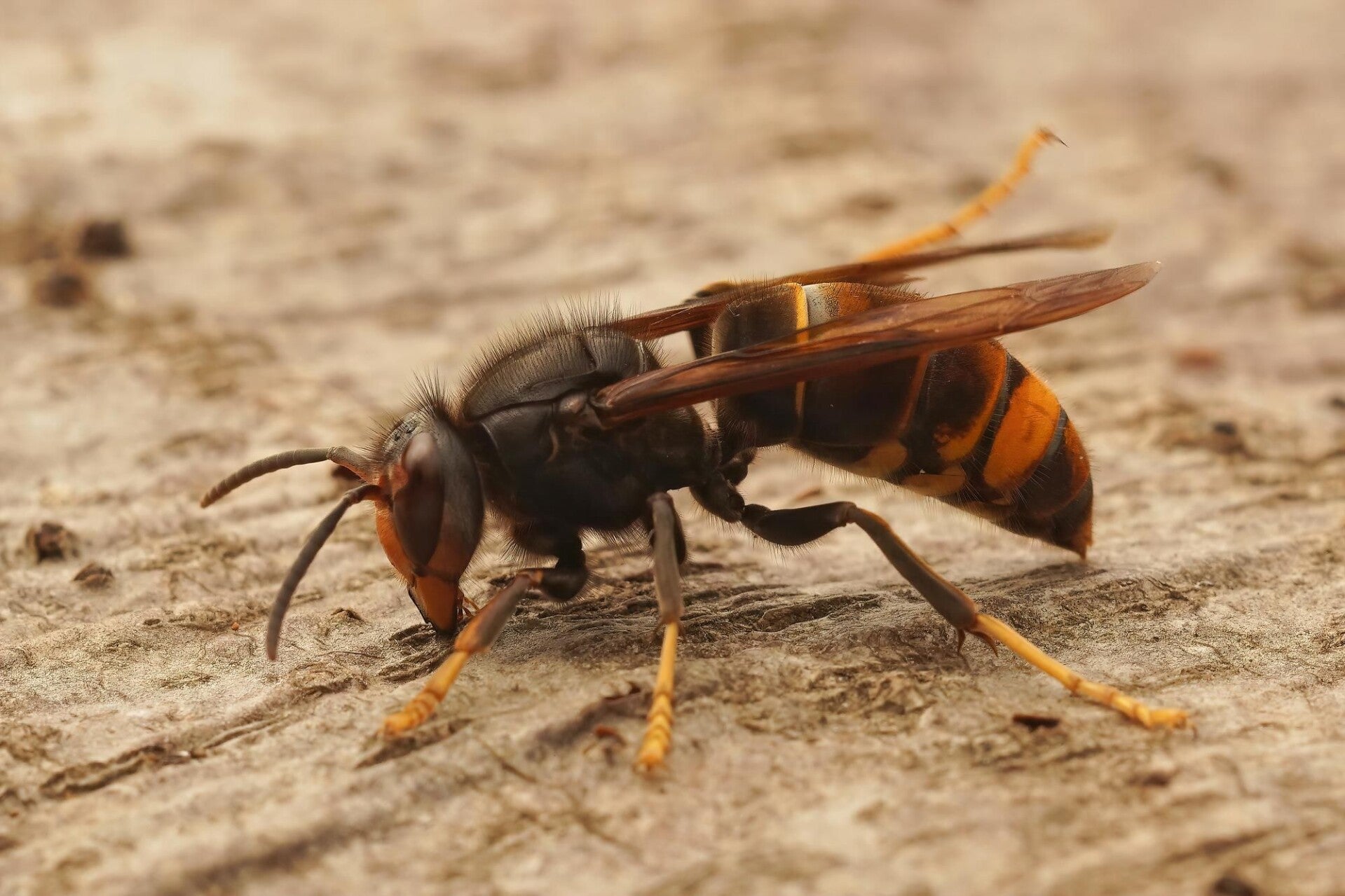
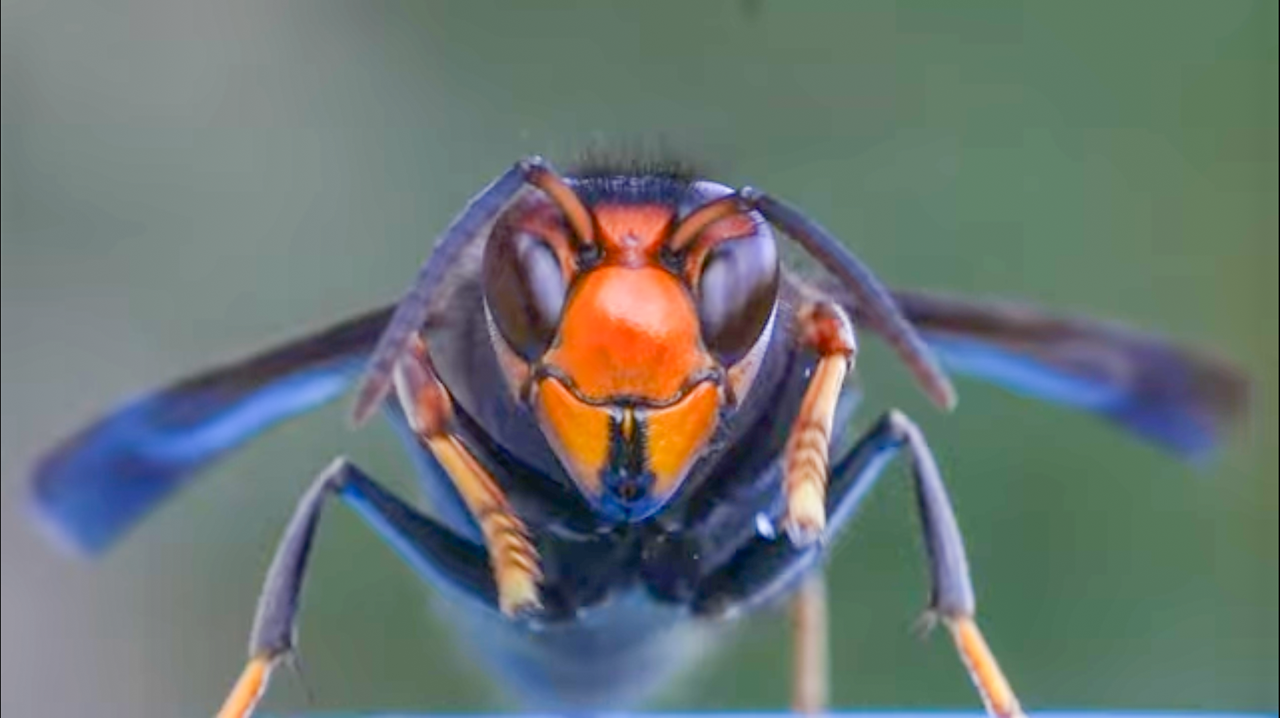
Asian hornet vs. European hornet
The biggest confusion is with the European hornet — which is larger, lighter and protected. Here's how to tell them apart.
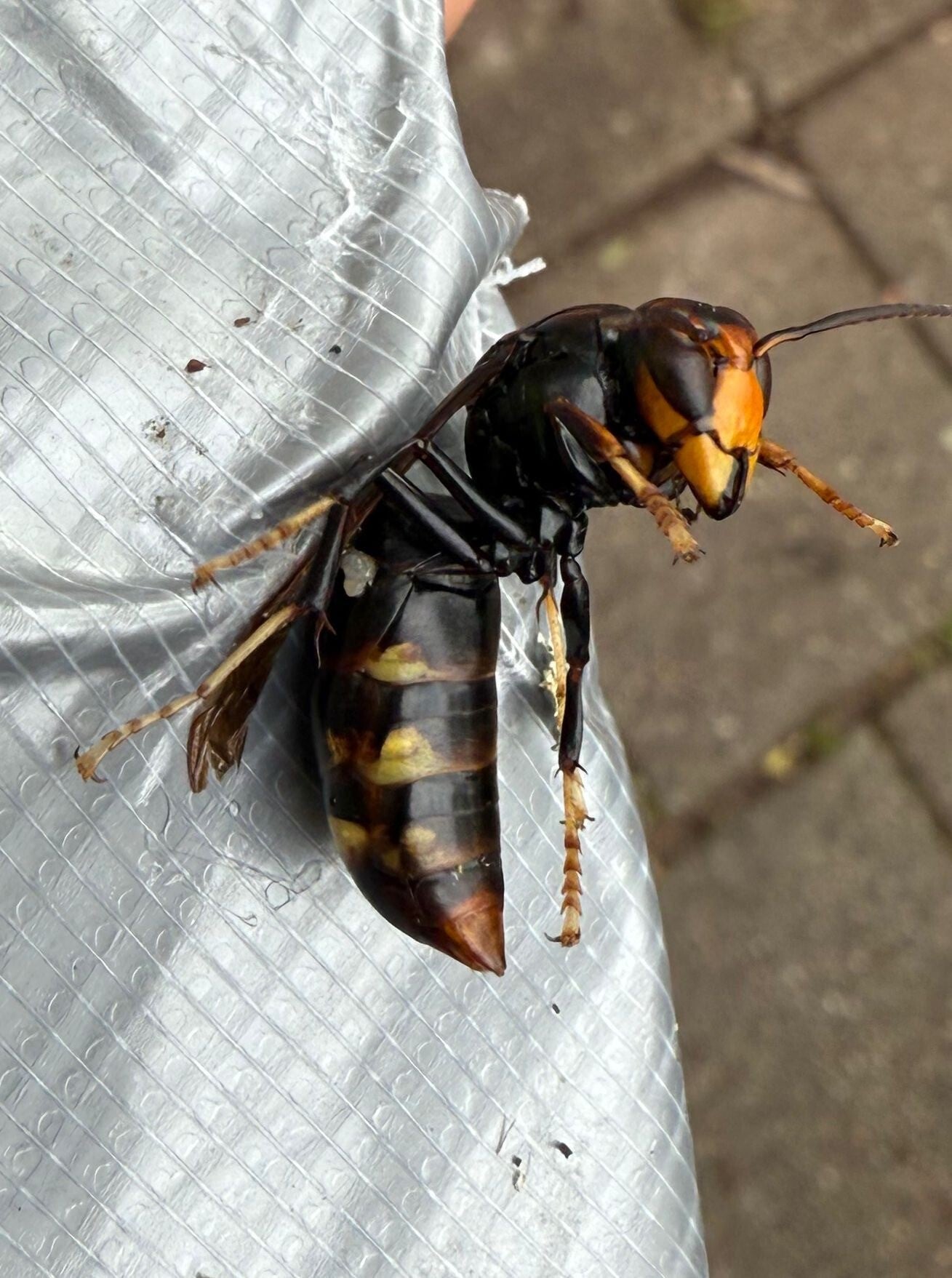
Asian hornet (Vespa velutina)
- Yellow legsBright yellow leg tips on all six legs — the strongest identifier.
- Dark bodyDark brown to black, with one distinct orange-yellow band on the abdomen.
- Orange faceHead and face are orange-yellow.
- Smaller sizeWorkers ~2 cm — smaller than a European hornet.
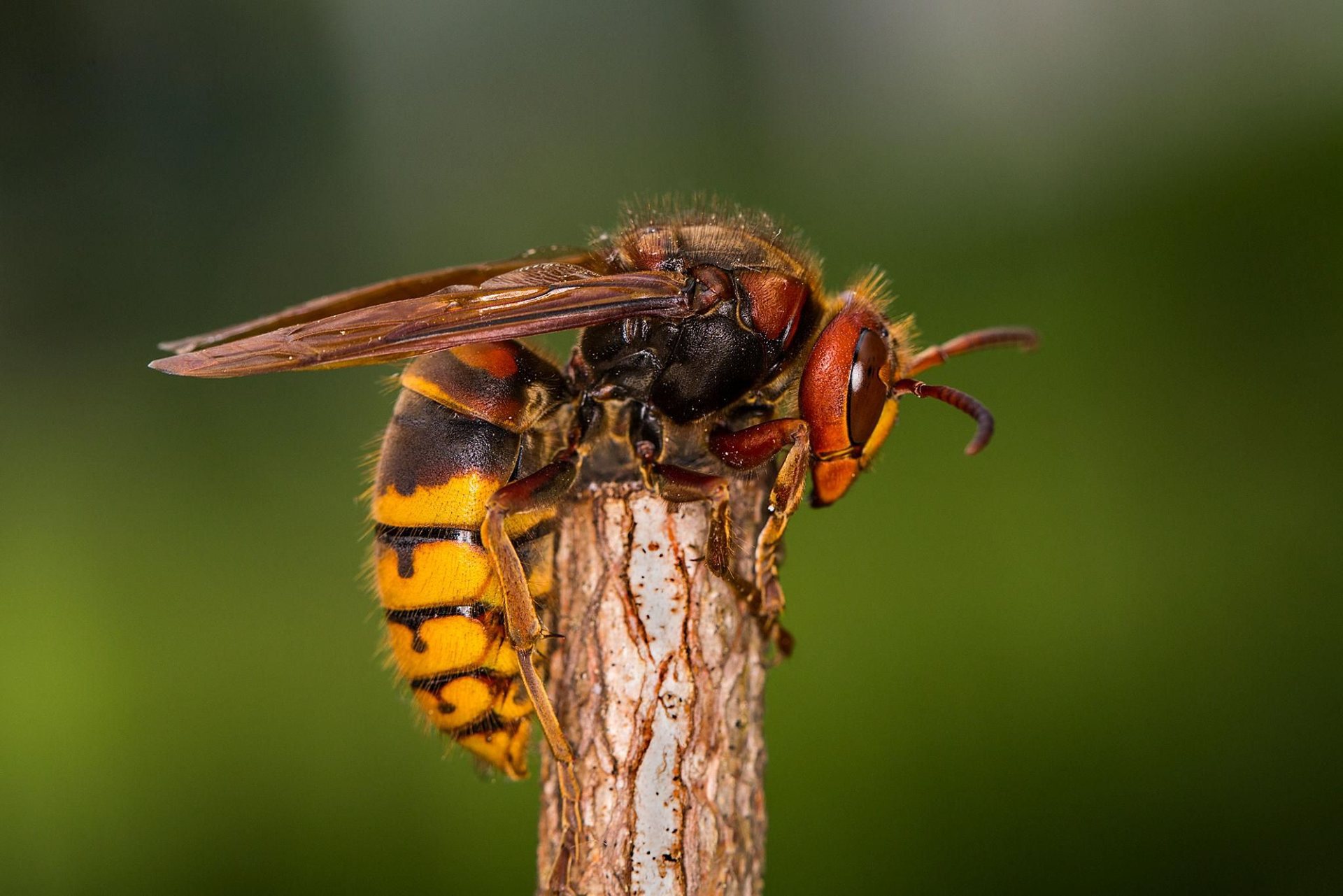
European hornet (Vespa crabro)
- LargerWorkers 2.5–3.5 cm — noticeably bigger than the Asian species.
- Brown/yellow stripedBody has multiple stripes, not a single band.
- Brown legsNo bright yellow leg tips.
- Protected speciesThe European hornet is beneficial and must not be casually killed.
What does an Asian hornet nest look like?
Primary nest (spring)
Small, round, size of a tennis ball up to a melon. Often low: sheds, garden houses, hedges. Usually contains 1–2 queens.
Secondary nest (summer)
Much larger — from beach ball to 80 cm. Often high in trees, sometimes on roofs or in wall cavities. Can contain 2000+ hornets.
Shape
Spherical or pear-shaped, papery grey-brown outer layer with visible layers.
Activity
Constant busy flight movement in and out of a single opening, especially in daylight when weather is fair.
Identification questions
What is the geelpoothoornaar?
Is the Asian hornet dangerous?
What does the Asian hornet do in nature?
Difference from a wasp?
Not sure what you saw?
Send a photo via WhatsApp. We'll tell you whether it's the Asian hornet and what's best to do.